
GAY
FILM REVIEWS BY MICHAEL D. KLEMM


|
||||||
|
GAY
FILM REVIEWS BY MICHAEL D. KLEMM
|
||||||
|
|
|
|
|
|
|
|
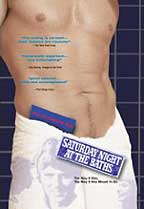
Saturday Night at the Baths WaterBearer
Films, Director: Screenplay:
Starring:
Unrated, 82 minutes |
And
Another From The Vaults
This is the second occurrence, in less than a month, where I have screened - for the first time - an older gay film whose press release trumpets that it has been "virtually unseen" since its 1975 release. Each one, oddly, is surprisingly positive and unapologetic, considering that they were filmed over thirty years ago. Last month's discovery was a French film called Johan. This time it's an American one that I have wanted to see for some time, directed by David Buckley, entitled Saturday Night At The Baths. |
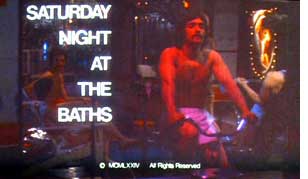 To
be honest, I wasn't expecting much from this movie. A curio, perhaps; a
nice time capsule of the period. But, in spite of its low budget and sometimes-stilted
acting, it turned out to rather enjoyable. At the very least, it's a great
guilty pleasure that provides a peek at a nostalgic era of pre-AIDS gay
liberation. Saturday Night At The Baths
is the story of a bisexual triangle set against the backdrop of the legendary
Continental Baths. Michael (Robert Aberdeen) is a young pianist from Montana
who has recently relocated to New York City. Looking for employment, he
applies for the pianist job at the Baths. His girl friend, Tracy (Ellen
Sheppard), tells him that, even though the Baths are famed for their "decadence,"
he "has to start somewhere." To
be honest, I wasn't expecting much from this movie. A curio, perhaps; a
nice time capsule of the period. But, in spite of its low budget and sometimes-stilted
acting, it turned out to rather enjoyable. At the very least, it's a great
guilty pleasure that provides a peek at a nostalgic era of pre-AIDS gay
liberation. Saturday Night At The Baths
is the story of a bisexual triangle set against the backdrop of the legendary
Continental Baths. Michael (Robert Aberdeen) is a young pianist from Montana
who has recently relocated to New York City. Looking for employment, he
applies for the pianist job at the Baths. His girl friend, Tracy (Ellen
Sheppard), tells him that, even though the Baths are famed for their "decadence,"
he "has to start somewhere." |
|
|
|
|
 The
plot is a little slim but it was pretty radical for its time. Films that
celebrated gay sexuality were not exactly the norm in the mid-70s. All one
had to do to get a laugh in a movie back then was to simply dangle one's
wrist and speak in a lisp. It goes without saying that Saturday
Night At The Baths probably did not play in Topeka, Kansas
but, still, those that did get to see it in large cities like New
York and San Francisco were treated to a celluloid treat where the fag didn't
off himself in the final reel. Saturday Night
At The Baths isn't a major studio release (like Making
Love, seven years later) but it isn't one of those "shocking" dykesploitation
flicks like That Tender Touch
either. It falls somewhere in the middle. The
plot is a little slim but it was pretty radical for its time. Films that
celebrated gay sexuality were not exactly the norm in the mid-70s. All one
had to do to get a laugh in a movie back then was to simply dangle one's
wrist and speak in a lisp. It goes without saying that Saturday
Night At The Baths probably did not play in Topeka, Kansas
but, still, those that did get to see it in large cities like New
York and San Francisco were treated to a celluloid treat where the fag didn't
off himself in the final reel. Saturday Night
At The Baths isn't a major studio release (like Making
Love, seven years later) but it isn't one of those "shocking" dykesploitation
flicks like That Tender Touch
either. It falls somewhere in the middle. |
|
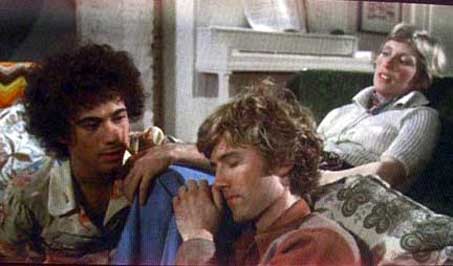
 Michael
is dealing with some internalized homophobia while Tracy seems to be a lot
more open; not to mention intuitive. When Michael asks her how he can stop
the guys at the Baths from hitting on him, she asks if he is giving off
signals. Around the middle of the film is a very nicely done scene where
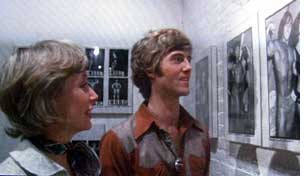
Scotti smokes a joint with Michael and Tracy. They have just attended a
photography exhibit and Tracy, who is a photographer herself, giggles about
how she was more than "just flattered" when two beautiful lesbians
asked if she would come home with them to take their pictures. Scotti wistfully
tells them about those "rare times with strangers" when "passion mingles
with love and trust" and describes a spontaneous orgy between himself, another
gay friend, and those same two women. Michael and Tracy are clearly fascinated.
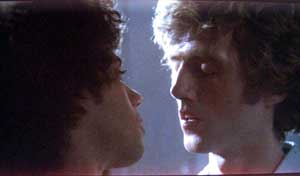
Or it's just the pot. When Michael feels Scotti's hand stroking his, he
nervously stammers, "I don't think I can handle this right now" but he doesn't
move away from him either. Michael
is dealing with some internalized homophobia while Tracy seems to be a lot
more open; not to mention intuitive. When Michael asks her how he can stop
the guys at the Baths from hitting on him, she asks if he is giving off
signals. Around the middle of the film is a very nicely done scene where
Scotti smokes a joint with Michael and Tracy. They have just attended a
photography exhibit and Tracy, who is a photographer herself, giggles about
how she was more than "just flattered" when two beautiful lesbians
asked if she would come home with them to take their pictures. Scotti wistfully
tells them about those "rare times with strangers" when "passion mingles
with love and trust" and describes a spontaneous orgy between himself, another
gay friend, and those same two women. Michael and Tracy are clearly fascinated.
Or it's just the pot. When Michael feels Scotti's hand stroking his, he
nervously stammers, "I don't think I can handle this right now" but he doesn't
move away from him either. |
|
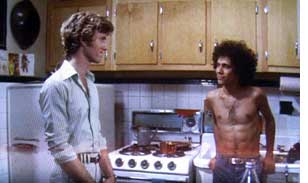 This
leads, later on, to some really forced dialogue between the two guys. "You
know what I'm talking about," Michael shouts and Scotti replies "How
am I supposed to know what you're talking about when you don't
know what you're talking about?" But luckily, before this can descend into
Valley of the Dolls, Michael delivers a beautiful monologue about
being 12 years old and caught in a storm with Greg, an Air Force fighter
pilot whom he idolized, and how they shared a sleeping bag to keep warm.
Sex doesn't appear to have entered the picture but, the next morning, Michael's
father and a squad of MPs broke into their cabin and dragged Greg away.
"The lesson of the story," according to Michael, "Is that I learned not
to touch men." This speech precedes, by decades, similar confessional scenes
in films as varied as My
Own Private Idaho, Latter
Days, and Brokeback
Mountain. This
leads, later on, to some really forced dialogue between the two guys. "You
know what I'm talking about," Michael shouts and Scotti replies "How
am I supposed to know what you're talking about when you don't
know what you're talking about?" But luckily, before this can descend into
Valley of the Dolls, Michael delivers a beautiful monologue about
being 12 years old and caught in a storm with Greg, an Air Force fighter
pilot whom he idolized, and how they shared a sleeping bag to keep warm.
Sex doesn't appear to have entered the picture but, the next morning, Michael's
father and a squad of MPs broke into their cabin and dragged Greg away.
"The lesson of the story," according to Michael, "Is that I learned not
to touch men." This speech precedes, by decades, similar confessional scenes
in films as varied as My
Own Private Idaho, Latter
Days, and Brokeback
Mountain. |
|
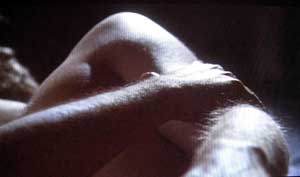 There
are two quite lengthy sexual interludes, one hetero, one homo. The male
love scene is especially candid for a non-porn film from 1975. Lyrical and
tender, it drips with tasteful carnality. There are lovely close-ups of
hands stroking a hairy arm or a leg, and slow sensuous kisses. Long shots
of them lying together alternate with the camera moving in close, following
the lines of shoulders or buttocks to transform their bodies into vast erotic
landscapes. There
are two quite lengthy sexual interludes, one hetero, one homo. The male
love scene is especially candid for a non-porn film from 1975. Lyrical and
tender, it drips with tasteful carnality. There are lovely close-ups of
hands stroking a hairy arm or a leg, and slow sensuous kisses. Long shots
of them lying together alternate with the camera moving in close, following
the lines of shoulders or buttocks to transform their bodies into vast erotic
landscapes. |
|
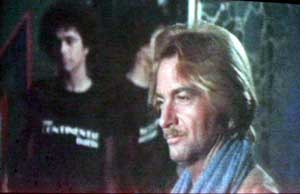 I
wrote earlier that Saturday Night At The Baths
was a very low budget film but, you know, a lot of today's queer
indies look just the same. I enjoyed it more than I ever expected to. The
ending really engaged me; I anticipated a conclusion with histrionics but
instead it was left wide open. It depends on the movie, but ending with
a question can sometimes be a good thing. Look at 2001 and Blow-Up.
But Saturday Night At The Baths
isn't Brokeback Mountain,
far from it. The acting in the first scenes is so stiff that it is painful,
but they must have shot most of the movie in sequence because the actors
relax into their roles more and more as the film goes on. The director reveals,
on the disc's extras, that he hired an uptight actor to play Michael while
he cast the actual manager of the Continental Baths, Don Scotti, to play
Scotti. The club's founder, Steve Ostrow, also appears as himself in the
film. I
wrote earlier that Saturday Night At The Baths
was a very low budget film but, you know, a lot of today's queer
indies look just the same. I enjoyed it more than I ever expected to. The
ending really engaged me; I anticipated a conclusion with histrionics but
instead it was left wide open. It depends on the movie, but ending with
a question can sometimes be a good thing. Look at 2001 and Blow-Up.
But Saturday Night At The Baths
isn't Brokeback Mountain,
far from it. The acting in the first scenes is so stiff that it is painful,
but they must have shot most of the movie in sequence because the actors
relax into their roles more and more as the film goes on. The director reveals,
on the disc's extras, that he hired an uptight actor to play Michael while
he cast the actual manager of the Continental Baths, Don Scotti, to play
Scotti. The club's founder, Steve Ostrow, also appears as himself in the
film. |
|
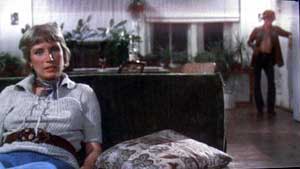 The
film screams 1970s. Not just the haircuts and the clothes, but also
the look of the photography and the music. Despite boasting an original
score, most of the un-credited music belongs to composer Erik Satie, specifically
his very well-known Trois Gymnopedies, performed mechanically on
the piano and sometimes on woodwinds. The disco-style music heard in the
Baths is heavy on the flute and sounds like an unholy union between Issac
Hayes' theme from Shaft and Jethro Tull. The
film screams 1970s. Not just the haircuts and the clothes, but also
the look of the photography and the music. Despite boasting an original
score, most of the un-credited music belongs to composer Erik Satie, specifically
his very well-known Trois Gymnopedies, performed mechanically on
the piano and sometimes on woodwinds. The disco-style music heard in the
Baths is heavy on the flute and sounds like an unholy union between Issac
Hayes' theme from Shaft and Jethro Tull. |
|
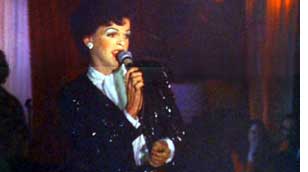 But,
all flaws aside, Saturday Night At The Baths
offers the sheer pleasure of seeing the famed Continental Baths preserved
on celluloid. All we're missing is Bette Middler. There are many scenes
that were shot inside the actual Baths; the pool with its famous fountain,
the dance floor, the steambaths, the showers. Men in towels dance performance
art ballet, a drag show includes Judy Garland, Diana Ross and Shirley Bassey
(!) The Soho art exhibit mentioned earlier features early body building
photography from Bruce Webber. Like the French film from the same year,
Johan, the 1978 British ditty, Nighthawks,
and even 1980's Cruising,
Saturday Night At The Baths features
a tour of a gay scene from long, long ago in a galaxy far away; it can be
enjoyed simply as a historical document. At the same time, however, one
gets a sense of perspective upon realizing that many of the men in each
of these movies probably died from AIDS complications within the next decade. But,
all flaws aside, Saturday Night At The Baths
offers the sheer pleasure of seeing the famed Continental Baths preserved
on celluloid. All we're missing is Bette Middler. There are many scenes
that were shot inside the actual Baths; the pool with its famous fountain,
the dance floor, the steambaths, the showers. Men in towels dance performance
art ballet, a drag show includes Judy Garland, Diana Ross and Shirley Bassey
(!) The Soho art exhibit mentioned earlier features early body building
photography from Bruce Webber. Like the French film from the same year,
Johan, the 1978 British ditty, Nighthawks,
and even 1980's Cruising,
Saturday Night At The Baths features
a tour of a gay scene from long, long ago in a galaxy far away; it can be
enjoyed simply as a historical document. At the same time, however, one
gets a sense of perspective upon realizing that many of the men in each
of these movies probably died from AIDS complications within the next decade. |
|
|
All in all, this is a worthy DVD. Anyone who is a student of our queer cinematic past should see this film as it is quite an achievement for its time. If you don't agree, it's still interesting historically. The documentary preserves the memories from two of our elder statesmen and this is also important. Many of our historians are gone now; Barbara Giddings, Harry Hay, Vito Russo, to name just a few. This DVD is a must for any collector.
Similar
films: |
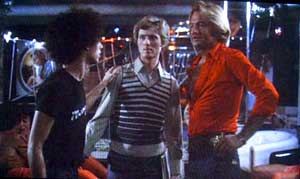 The
actor who plays Michael looks like a young, and slightly more effeminate,
Robert Redford. He is a bit taken aback by what he sees at the Baths,
especially when a very queeny man comes onto him. He becomes even more
uncomfortable when the manager, Scotti (Don Scotti), asks him if he ever
did it with a man before. Scotti's gaydar goes up when Michael spits out
the water he was drinking and then says, "Well... sure, when I was younger."
Despite hearing that Michael has a girl friend, Scotti knows a closet
case when he sees one and sets his sights.
The
actor who plays Michael looks like a young, and slightly more effeminate,
Robert Redford. He is a bit taken aback by what he sees at the Baths,
especially when a very queeny man comes onto him. He becomes even more
uncomfortable when the manager, Scotti (Don Scotti), asks him if he ever
did it with a man before. Scotti's gaydar goes up when Michael spits out
the water he was drinking and then says, "Well... sure, when I was younger."
Despite hearing that Michael has a girl friend, Scotti knows a closet
case when he sees one and sets his sights.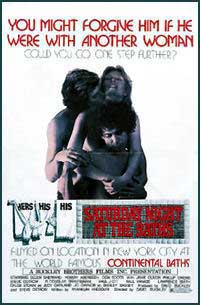 The
new DVD replaces the original 2005 video release with a fresh, and uncut,
master print from original director David Buckly's vault. The male sex
scene was cut from many original prints of the film and appears here intact.
The disc includes long interviews with both the director and the Baths'
founder, Steve Ostrow - who states that he agreed to appear in the film
because he felt that the director was "respectful." He shares the history
of the Continental Baths and many other reminiscences from the 70s. I
was intrigued that he spoke at length about an event in history that was
also given great weight in the documentary
The
new DVD replaces the original 2005 video release with a fresh, and uncut,
master print from original director David Buckly's vault. The male sex
scene was cut from many original prints of the film and appears here intact.
The disc includes long interviews with both the director and the Baths'
founder, Steve Ostrow - who states that he agreed to appear in the film
because he felt that the director was "respectful." He shares the history
of the Continental Baths and many other reminiscences from the 70s. I
was intrigued that he spoke at length about an event in history that was
also given great weight in the documentary